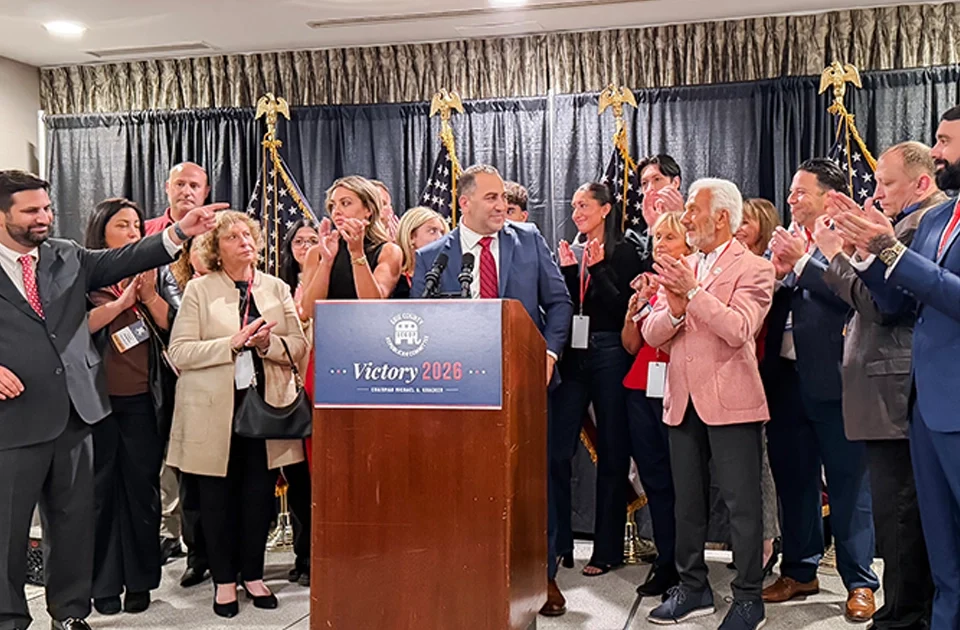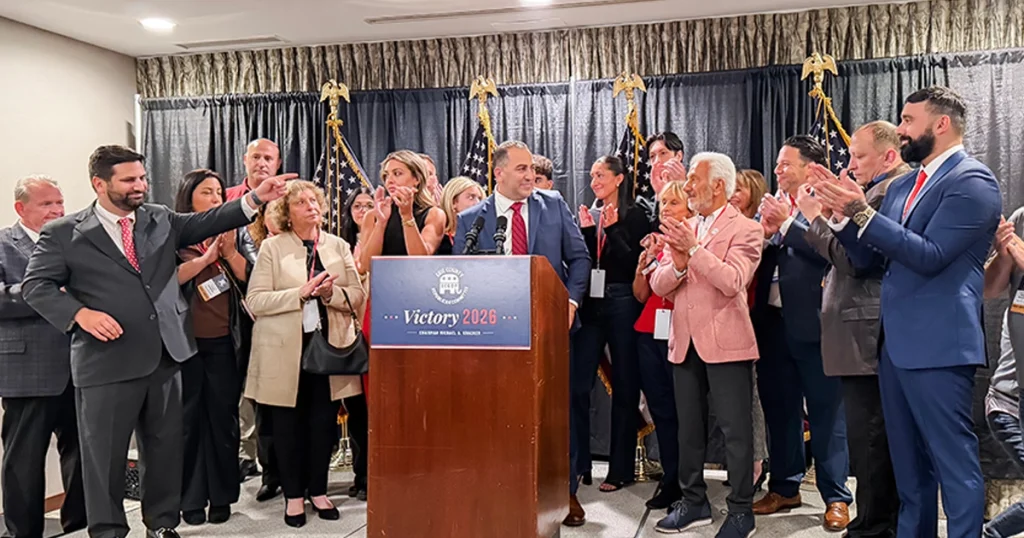
Frank Todaro Wins Reelection, Continuing Service to Lancaster and Cheektowaga
November 6, 2026
Cheektowaga Democrats Approve 9.8% Tax Levy Increase as Republican Council Members Oppose 2027 Budget
November 18, 2026
Cheektowaga’s two Republican Town Board members, Barbara Bakowski and Vernon Thompson, brought forward a package of proposed spending reductions and revenue adjustments aimed at easing the burden on taxpayers. During nearly two hours of debate over the 2027 budget, the board’s five-member Democratic majority voted to remove many of those reductions, preserving funding for staffing, departmental operations, and equipment.
The clearest party-line divisions came over pool payroll, revenue projections, and a group of proposed cuts to personnel legal services, engineering, IT, and communications. On those questions, all five Democrats voted to remove the Republican proposals, while Bakowski and Thompson voted to keep them. Those decisions left more spending in the proposed budget, or less projected non-property-tax revenue available to finance it, than the Republican package envisioned.
The meeting nevertheless ended without a final decision on the town’s tax levy. The amended cuts package failed, both annual budget adoption resolutions were tabled, and a later reconsideration effort was withdrawn. The final vote also crossed party lines: Republican Bakowski opposed the amended package, while Democrat Monica Elderkin supported it alongside Thompson.
The Republican-sponsored proposal, Resolution 2026-736, became the vehicle for 17 amendments. Its treatment illustrated the divide between the minority’s push for a leaner budget and the majority’s decisions to retain many of the proposed spending allocations. Republicans introduced the broader package of proposed reductions. Some Democrats offered additional savings, while the Democratic majority voted to remove several major Republican proposals.
What was originally proposed
The package sought reductions across staffing, overtime, equipment, fuel, road work, and administrative expenses. Among its more significant provisions were removing approximately $85,000 for a proposed deputy highway position, removing $72,000 for an additional full-time dog-control officer, and reducing pool payroll from $274,903 to $232,360—a $42,543 reduction.
It also proposed eliminating the Town Board’s part-time wages line, reducing the supervisor’s regular payroll to $139,723, setting blacktop funding at $400,000, and reducing highway salt funding to $400,000. Other changes targeted engineering, IT, communications, personnel legal services, sanitation equipment, sewer improvements, and several overtime accounts.
The revenue provisions would have raised estimates for cannabis tax, highway and part-town sales taxes, interest, mortgage tax, police miscellaneous revenue, and building permits and inspections. Those increases would have reduced the amount needed from other funding sources if the receipts materialized; they were not spending cuts. The listed hotel bed-tax estimate would have remained unchanged at $1.5 million.
Which reductions gained support during the debate
The following changes remained in the amended package presented for the final vote. Because that package failed, these should be understood as proposals that survived the amendment process, rather than enacted cuts.
- Deputy highway staffing
- Revise the original reduction to leave $20,000 available for coverage duties, producing an approximately $65,000 reduction rather than eliminating the entire proposed allocation.
- Dog control
- Retain the proposed $72,000 reduction for an additional full-time officer. A duplicate entry was deleted; the underlying reduction remained.
- Supervisor’s office
- Replace the original payroll cut with an $18,479 reduction, intended to retain one full-time and one part-time assistant rather than fund two full-time assistants.
- Blacktop
- Retain the proposed $400,000 allocation, approximately $375,000 below the preliminary proposal discussed at the meeting.
- Parks
- Retain proposed allocations of $90,000 for overtime and $500 for Cayuga Road land rental.
- Senior services
- Retain removal of a $175 line, a $1,000 travel/training allocation, and a $25,000 allocation for the line identified in discussion as FeedMore.
- Other administrative items
- Retain a $600 Town Board travel/training allocation and proposed overtime targets for pools, buildings and grounds, and traffic control, subject to the broader overtime amendment added later.
Figures described as allocations are the proposed amounts left in those accounts, not the amounts saved.
Councilmember Brian Pilarski also proposed returning overtime lines that still contained increases to their 2026 budget levels. He initially described potential savings of $151,837, but members noted that some overtime reductions already overlapped with the existing package. The amendment passed; the discussion did not establish a final reconciled savings total. Adding the full $151,837 to every other proposed cut would risk counting some savings twice.
Where the Democratic majority retained spending
Members voted to preserve the assessor’s conference and seminar funding at $5,300, citing required training. On pool payroll, the split was explicitly partisan: Democrats Tiffany Collins, Monica Elderkin, Brian Pilarski, Parvez Rahman, and Supervisor Brian Nowak voted to remove the proposed $42,543 reduction. Republicans Bakowski and Thompson opposed removing it. Discussion centered on lifeguard staffing and competitive pay.
They also removed the proposal to eliminate the Town Board’s part-time office position. The supervisor’s original payroll and grant-development changes were struck before the separate $18,479 payroll reduction was introduced.
Another 5–2 party-line vote removed the proposed changes to personnel legal services, engineering, central IT, and communications. Nowak proposed striking those sections, and all five Democrats supported doing so over the opposition of the two Republicans. The majority thereby retained the preliminary budget’s funding in those areas instead of accepting the minority’s proposed reductions.
Other amendments removed the proposed changes to central garage fuel and overtime. Members also struck the sanitation provisions that would have eliminated the garbage-packer allocation and reduced equipment/tote funding. Those votes did not all follow the same party split. The truck discussion centered on aging vehicles and whether purchases should be paid through the operating budget or borrowing.
The board removed the senior-services proposal to reduce a nutrition-related account to $500 after discussion that the department’s recommendation had instead been to reduce it by $500. Proposed emergency-services and sewer/main-pump changes were also removed. In the highway section, members struck the machinery labor, equipment, and salt reductions while leaving the blacktop proposal in place.
The proposed increases to revenue estimates were rejected on a party-line vote as well. Democrat Parvez Rahman argued that they were too optimistic, and all five Democrats supported removing them; Bakowski and Thompson opposed that amendment. Keeping the lower estimates meant the Republican proposal’s anticipated additional receipts would not be used to offset the budget’s funding needs. Separately, Democrat Pilarski’s proposal to use an additional $37,289.06 from fund balances, while bringing the affected balances to the discussed 15% level, received no second and did not advance.
Why the evening ended without an adopted cuts package
The amended Resolution 2026-736 failed 5–2. Councilmembers Monica Elderkin and Vernon Thompson voted yes. Bakowski, Tiffany Collins, Pilarski, Rahman, and Supervisor Brian Nowak voted no. The debate that followed included objections that the vote had been called before members finished proposing changes.
The board then tabled Resolution 2026-737, adopting the ad valorem budget, and Resolution 2026-738, adopting the benefit-basis budget. Those proposed budgets were not approved that evening.
When members later sought to reconsider the cuts package, Finance Director Brian Krause identified another unresolved issue: the resolution reduced spending but did not say whether the savings should lower the property-tax levy, reduce reliance on appropriated fund balance, or be divided between those purposes. Members expressed a desire to reduce the levy, but the reconsideration effort was withdrawn rather than completed.
In closing comments, Nowak said the board would find a time before November 20 to return for further budget work. The task for that meeting was therefore broader than approving a list of cuts: members still needed a complete resolution specifying both the spending changes and how those changes would affect the budget’s financing.
Calls for fiscal restraint and accountability
Public reaction also reflected frustration with the budget process. In a Facebook post, Dan Kollander criticized the Democratic majority’s treatment of the Republican proposals and urged taxpayers to evaluate officials by their actions.
“Watch their proposals. Watch their amendments. Watch their votes,” Kollander wrote.
Commenting on the budget debate, Vice Chair Derrick McKeown said the November 3 election’s implications would be felt through decisions affecting household budgets and town services.
“The results of the November 3 election will have real consequences for Cheektowaga families as the board makes decisions about taxes, spending, and services,” McKeown said. “Our Republican board members are pushing for fiscal restraint, but as a minority they need support from the Democratic majority to deliver it. Every resident deserves a board that examines spending carefully, protects essential services, and makes a serious effort to keep taxes affordable.”